



Syrian vs Dwarf Hamster in India: Which Is Better in 2026?

Contents
show
1
Syrian vs Dwarf Hamster in India: Which Is Better in 2026?
Syrian vs Dwarf Hamster in India: Which Is Better in 2026?
Which Should You Buy in India?
Updated September 2026 | Pet Multiverse Small Animal Care Team | 15 min read
Choosing your first hamster can be exciting, but it can also be confusing. Syrian hamsters and Dwarf hamsters look similar at first, yet they have different sizes, personalities, housing needs and handling styles. If you are searching for the Syrian vs Dwarf Hamster in India comparison, the most important thing to understand is that there is no single hamster that is perfect for every home. Your choice should depend on the space available, your daily routine, your expectations about handling and the amount of care you can provide.
Syrian hamsters are usually larger and easier to hold carefully. Dwarf hamsters are smaller, quick-moving and often enjoyable to watch as they explore their enclosure. Both can make interesting pets when they are given the right environment, food, enrichment and gentle handling. In this guide, we will compare Syrian and Dwarf hamsters for Indian homes, including size, temperament, cage requirements, cost, lifespan, heat management and daily care.
Syrian Hamster vs Dwarf Hamster: Quick Comparison
| Feature | Syrian Hamster | Dwarf Hamster |
|---|---|---|
| 1. Adult size : | Usually larger | Smaller and more compact |
| 2. Handling : | Often easier to hold because of its size | Can be quick and difficult to catch if frightened |
| 3. Activity : | Active mainly during evening and night | Active mainly during evening and night |
| 4. Housing : | Needs a spacious enclosure with a large wheel | Also needs a spacious enclosure despite its small size |
| 5. Social Housing : | Usually housed alone | Separate housing is generally the safest choice |
| 6. Personality : | Often easier for beginners to observe and handle | Energetic, fast and entertaining to watch |
| 7. Lifespan : | Commonly around 2–3 years | Commonly around 1.5–3 years, depending on type and care |
| 8. Best Suited For : | Owners who prefer a larger hamster | Owners who enjoy observing a small, active hamster |
NOTE :The table gives a general comparison. Individual hamsters can behave differently, so temperament should not be judged only by breed or size.

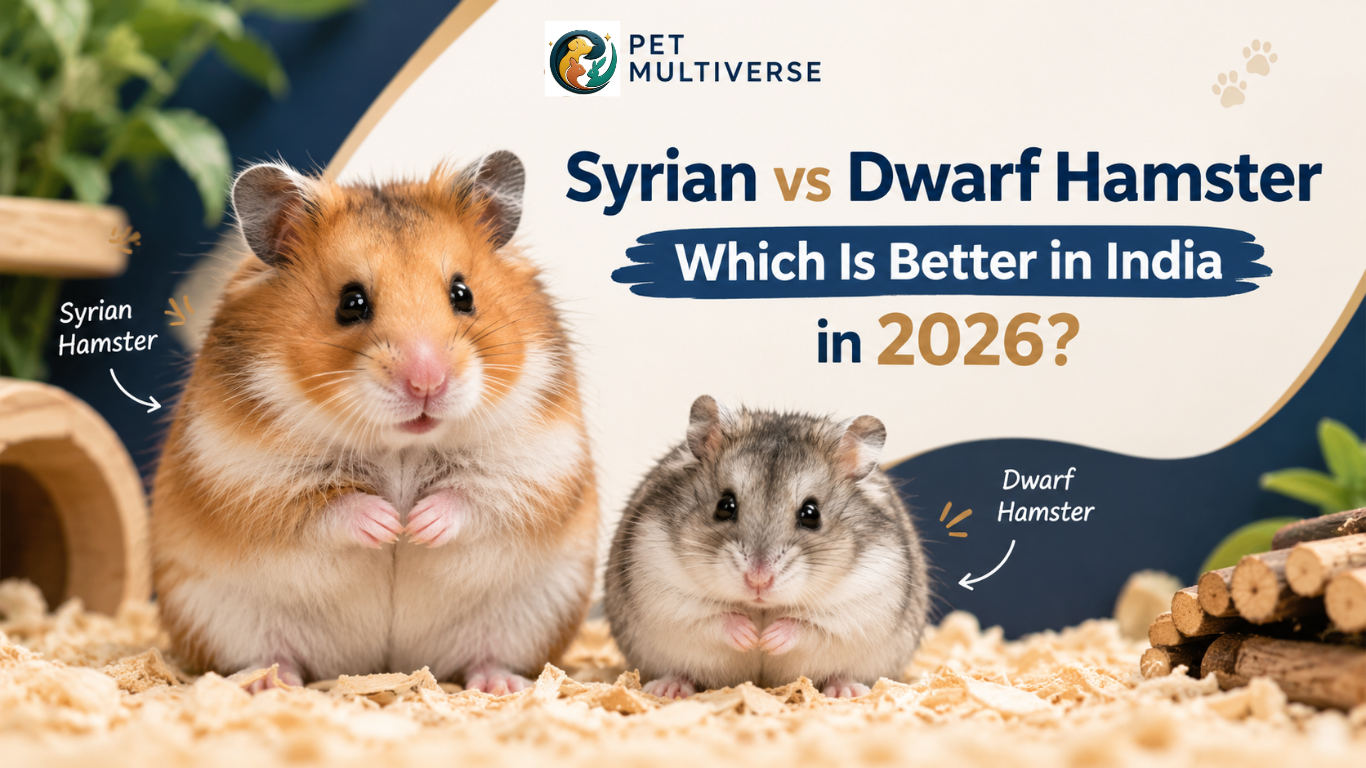
Syrian Hamster
• 12–18 cm
• Calmer temperament
• Must live alone
• 2–3 year lifespan
• Best for beginners and kids.

Dwarf Hamster
• 7–10 cm
• Fast & skittish
• Can pair (littermates only)
• 1.5–2 year lifespan
• Best for experienced owners.
1. What Is a Syrian Hamster?
The Syrian hamster is also known as the Golden hamster or Teddy Bear Hamster. Japanese Bloodlines Syrian Hamster is also available in market. It is one of the most commonly recognised hamster types and is often chosen by first-time owners. A Syrian hamster has a larger body than most Dwarf hamsters. Its size can make it easier to see, observe and handle gently. However, being larger does not mean that it needs a small cage. Syrian hamsters are active animals that need room to move, dig, explore and exercise. Syrian hamsters are generally solitary. They should normally be housed alone, especially after reaching maturity. Keeping two Syrian hamsters together can lead to serious fighting and injuries.
1.1 Syrian hamster personality
A Syrian hamster may become comfortable with regular, gentle interaction. Some are calm and curious, while others are shy or easily startled. A new hamster may need several days to settle into its surroundings before handling begins. Do not wake a hamster suddenly or grab it from above, this can frighten the animal and may lead to biting. It is better to allow the hamster to approach your hand at its own pace.
2. What Is a Dwarf Hamster?
“Dwarf hamster” is a general term used for several small hamster types, including Campbell’s hamsters, Winter White hamsters and Roborovski hamsters. These hamsters are smaller than Syrians, but they are not all identical their size, appearance, activity level and temperament can vary. Because Dwarf hamsters are small and fast, they may be more difficult for a beginner to handle safely. This does not mean they are poor pets, it simply means the owner needs patience, a secure enclosure and realistic expectations.
- Campbell's hamsters are small and active
- Winter White hamsters are known for their rounded appearance and may show seasonal coat changes
- Roborovski hamsters are very small and extremely quick
- Some hamsters sold as hybrids may have mixed characteristics
Syrian Hamster vs Dwarf Hamster: Size and Handling Differences
The most noticeable difference in the Syrian hamster vs dwarf hamster comparison is body size. Syrian hamsters are larger, so their movements are usually easier to follow. When handled correctly, their body is also easier to support with both hands. Dwarf hamsters are smaller and may move quickly when they feel nervous — Roborovski hamsters, in particular, can be difficult to hold for long periods because they are extremely fast.
Which hamster is easier to handle?
For many new owners, a Syrian hamster may be easier to handle because it is larger, easier to see in low light, easier to support with both hands, and often less difficult to guide back into its enclosure. However, the individual hamster’s personality is important. A calm Dwarf hamster may be easier to handle than a nervous Syrian hamster. Handling should always be gentle. Never squeeze, chase or lift a hamster by its tail or scruff.
Temperament and Daily Behaviour
Both Syrian and Dwarf hamsters are usually most active during the evening and night. They may sleep for much of the day, so they are not ideal pets for someone who expects constant daytime interaction. A hamster may run on its wheel, dig in bedding, collect food, explore tunnels and hides, groom itself, build a sleeping nest, and become active after sunset. The best hamster for your home depends partly on whether you enjoy observing these natural behaviours.
a. Syrian Hamster Behaviour
Often easier to observe because of their larger size. Some become comfortable sitting in your hands, but others prefer short handling sessions. They may suit owners who want to develop a gentle handling routine.
b. Dwarf Hamster Behaviour
Often lively and fast — fun to watch while exploring, digging and running. They may not always enjoy being held for long periods; some prefer interaction at ground level, such as taking a treat from your hand or climbing onto a safe platform.
Cage Requirements for Syrian and Dwarf Hamsters
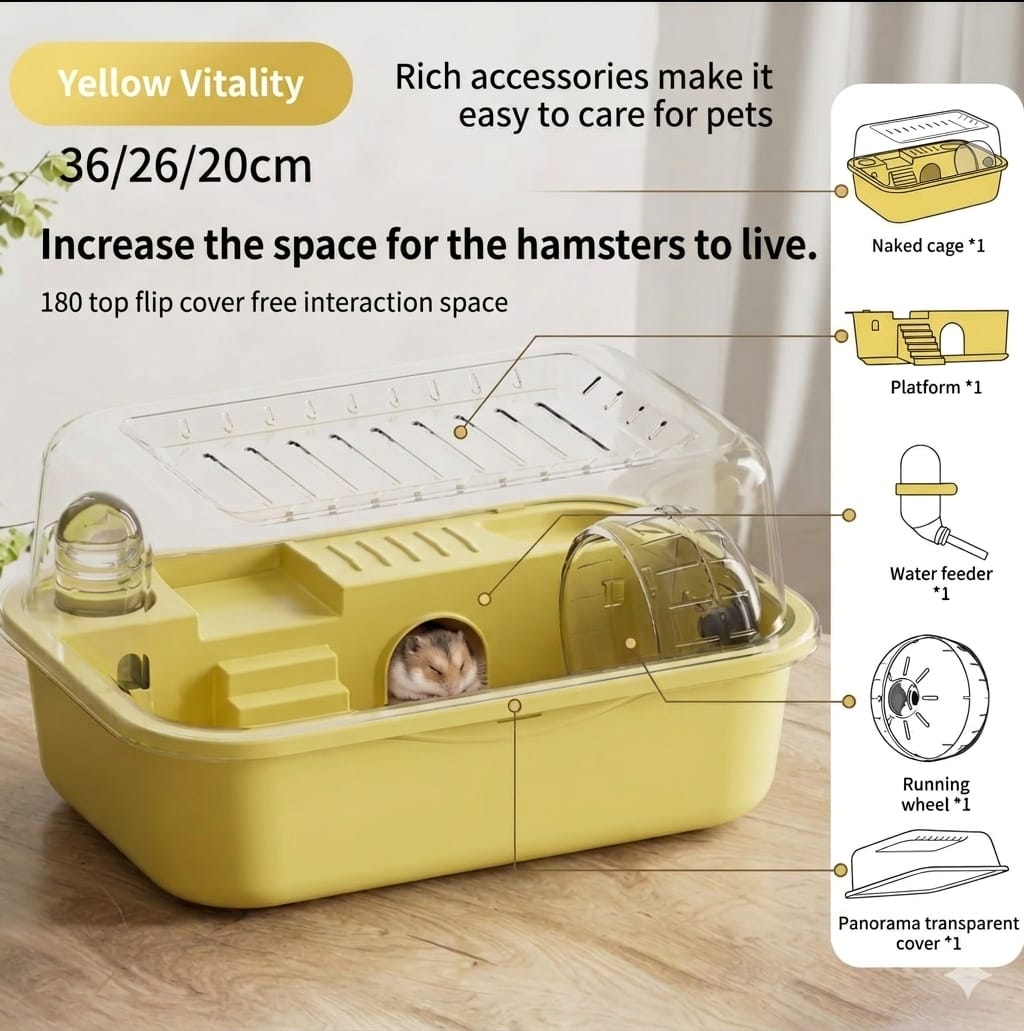
One common mistake is assuming that a Dwarf hamster needs only a very small cage because its body is small. In reality, both Syrian and Dwarf hamsters need a spacious, secure enclosure with enough room for natural movement and enrichment. When choosing a cage, focus on: continuous floor space, good ventilation, secure doors, enough room for deep bedding, space for a correctly sized wheel, room for hides/food bowls/enrichment, and protection from direct sunlight and excessive heat. A large enclosure is usually better than a small cage filled with narrow tubes and unnecessary levels, hamsters spend a lot of time moving across the floor, digging and exploring.
Syrian hamster cage
Needs a large enclosure because of its body size and activity level. The wheel must be large enough for the hamster to run without bending its back. Avoid very small wheels, wire running surfaces and cages with narrow entrances.
Dwarf hamster cage
Also needs generous floor space a smaller body does not remove the need for exercise, digging and exploration. Dwarf hamsters may also escape through surprisingly small gaps, so the enclosure must be secure. Check doors, mesh openings and corners regularly. (See the RSPCA’s hamster housing guidance for more on welfare-based enclosure standards.)
PET MULTIVERSE COLLECTIONS
BEST SELLING PRODUCTS
Everything Your Hamster Needs in One Place
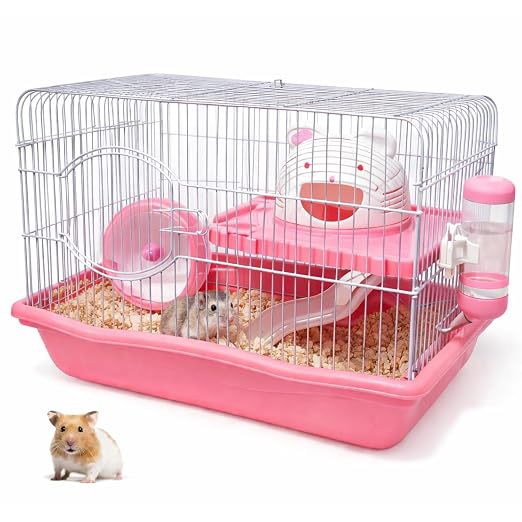
Double Layer Hamster Cage with Wheel – 43×30×33cm

Hamster Exercise Ball 18cm – Transparent, Twist-Lock
Rated 5.00 out of 5

Hamster Wooden Shaving Bedding 1kg – Low-Dust
Rated 5.00 out of 5

Large Hamster Cage with Wheel & Accessories
Rated 5.00 out of 5
Silent Hamster Wheel 18cm – Anti-Slip
Rated 5.00 out of 5
Wheel and Enrichment Requirements
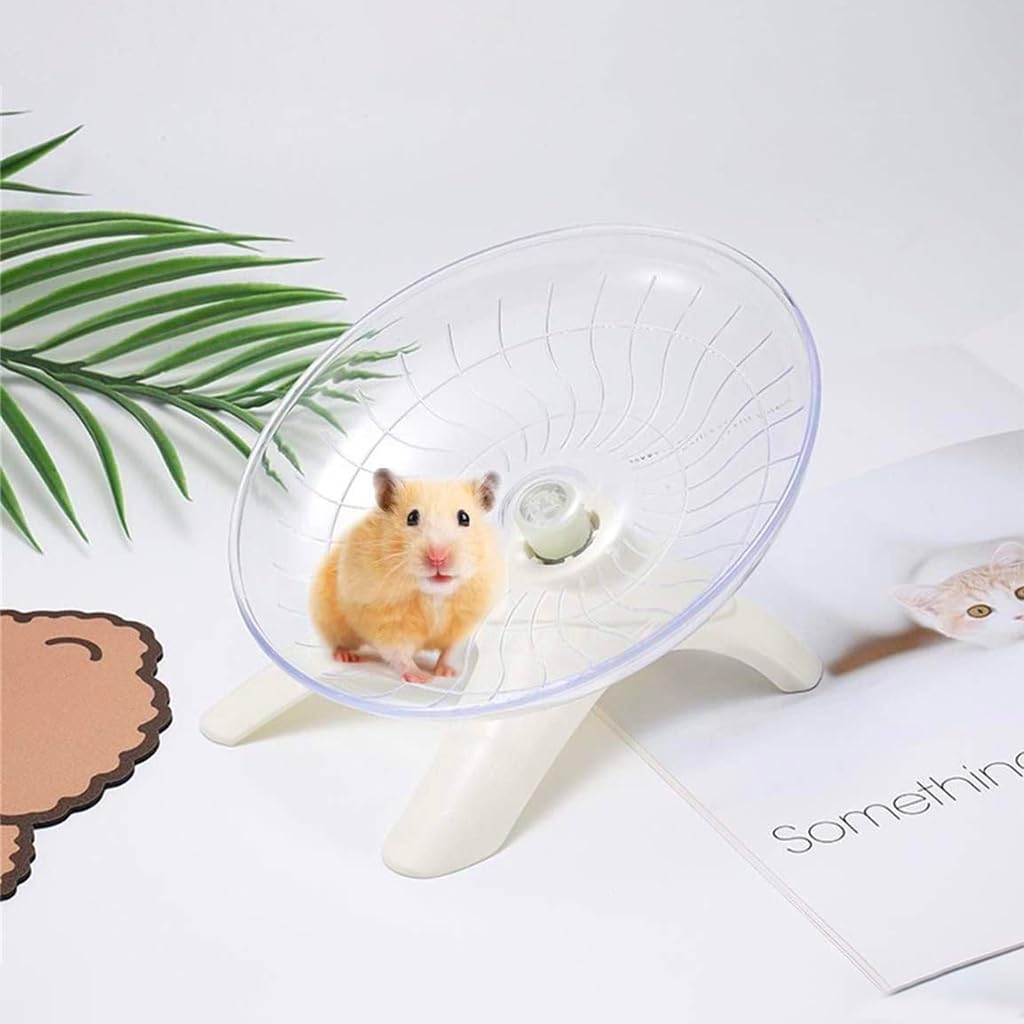
A suitable wheel is one of the most important items in a hamster enclosure. The wheel should have a solid running surface, no dangerous gaps, enough diameter for the hamster to run comfortably, stable support, and quiet movement where possible. The hamster’s back should remain reasonably straight while running. If the animal has to bend sharply, the wheel may be too small. Hamsters also need more than a wheel. Useful enrichment can include deep aspen wooden shaving based bedding, cardboard tunnels, wooden hides, safe chew items, forage activities, sand baths where appropriate, nesting material, and different textures and areas to explore.
Syrian Hamster Care in India
Syrian hamster care in India requires attention to temperature, ventilation, food, bedding and daily routine. Indian summers can be challenging for hamsters because they are sensitive to excessive heat their enclosure should be kept indoors in a cool, shaded and well-ventilated area.
Heat management
Keep the enclosure away from direct sunlight, avoid placing it beside a hot window, do not keep it near a kitchen or heat-producing appliance, provide good airflow without a strong direct draft, monitor room temperature during hot weather, and use safe cooling methods recommended by an experienced veterinarian when necessary. Do not place ice directly inside the hamster’s sleeping area sudden temperature changes and moisture can create additional problems.
Food and water
A balanced diet should include a suitable commercial hamster food as the main part of the diet. Fresh vegetables may be offered in small, appropriate portions, but new foods should be introduced slowly. Fresh drinking water should always be available, check the bottle or bowl daily. Avoid feeding sugary, salty, spicy or heavily processed human foods.
Bedding and nesting
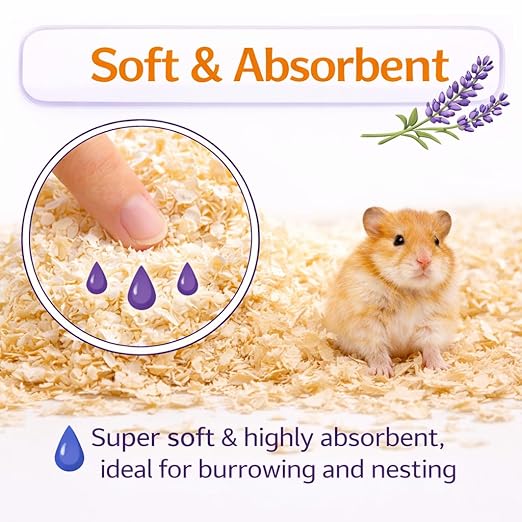
Syrian hamsters enjoy digging and creating nests. Provide enough safe bedding for burrowing and sleeping. Avoid strongly scented bedding, dusty materials and unsafe fluffy nesting products that may wrap around limbs or cause swallowing problems.
TODAY HOT DEALS
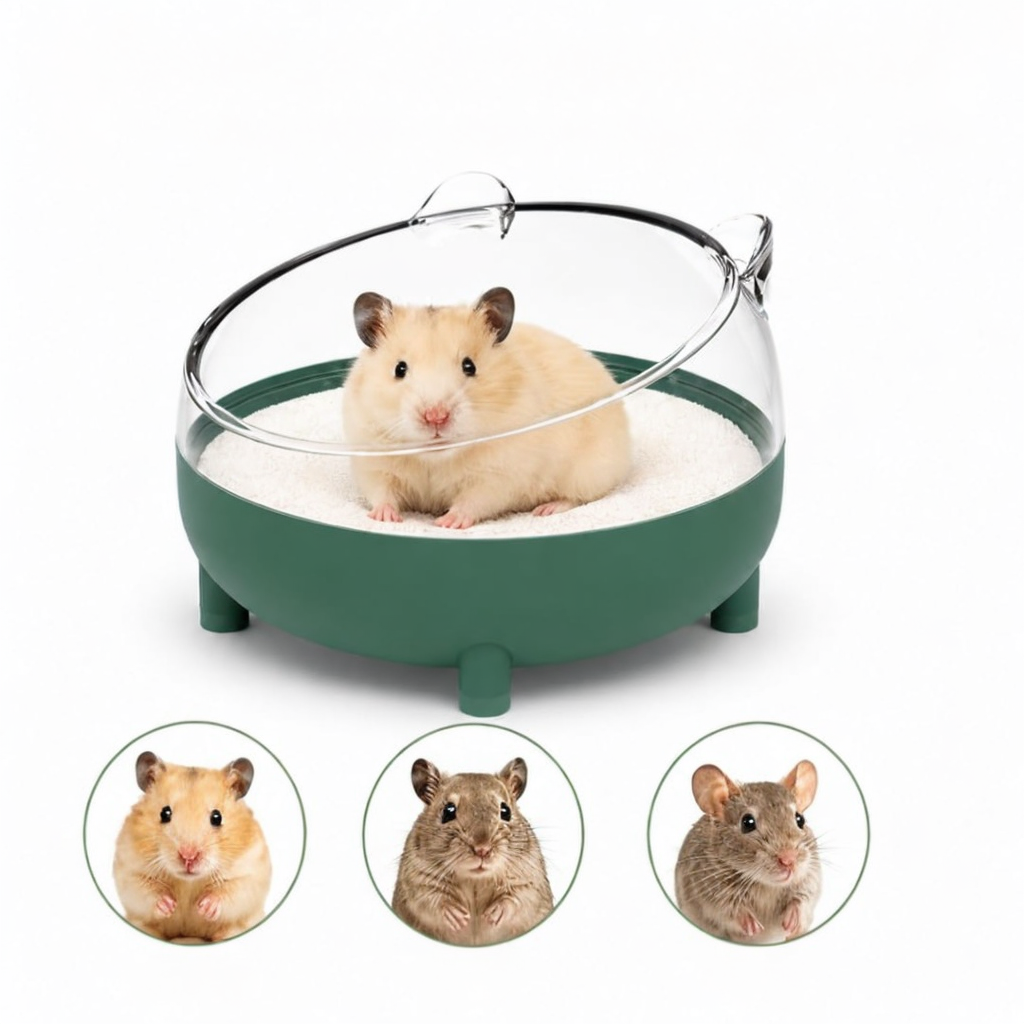
Hamster Sand Bath Bowl with Cover – Spill-Resistant

Hamster Sand Bathing 500g – Dust-Free Grooming Sand
Hamster Water Bottle 80ml – Leak-Proof
Dwarf Hamster Care in India
Dwarf hamster care in India is similar to Syrian hamster care, but the smaller size creates a few additional challenges.
1. Secure housing
Dwarf hamsters can fit through small gaps. Check the enclosure carefully. It should have secure doors, safe mesh spacing, no loose corners, no sharp edges, a stable base, and enough ventilation.
2. Handling
Dwarf hamsters may be nervous when first introduced to a new home. Start with short sessions: sit near the enclosure quietly, speak softly, offer a small suitable treat, allow the hamster to approach your hand, avoid sudden movements, and handle only when the hamster is awake and relaxed. Do not wake a sleeping hamster to play.
3. Heat and ventilation
Dwarf hamsters also need protection from Indian summer heat. Keep the enclosure in a cool room and avoid direct sunlight. Good ventilation is important, but avoid harsh wind, heavy dust or sudden temperature changes.
Can Syrian and Dwarf Hamsters Live Together?
Syrian hamsters should generally live alone. Dwarf hamsters are sometimes described as social, but this does not mean every pair will remain compatible, fighting can happen, and injuries may be serious. For a new owner, separate housing is usually the safer and simpler option. If someone is considering group housing, they should first obtain species-specific guidance from an experienced exotic-pet veterinarian or qualified welfare professional. Never place a Syrian hamster and a Dwarf hamster together, they have different sizes, behaviours and space requirements, and the smaller hamster could be seriously injured.
Lifespan of Syrian and Dwarf Hamsters
Hamster lifespan depends on genetics, diet, housing, stress, illness and general care. As a broad guide: Syrian hamsters often live around 2–3 years; Dwarf hamsters may live around 1.5–3 years, depending on the type; Roborovski hamsters may have different lifespan expectations from other Dwarf varieties. These figures are estimates, not guarantees. Regular observation is important changes in appetite, breathing, movement, weight, drinking or toilet habits should not be ignored. Hamsters can become unwell quickly, so contact a veterinarian familiar with small mammals when something appears unusual.
Hamster Cost and Setup Budget in India
The total cost of keeping a hamster is more than the purchase price. Your initial setup may include: enclosure, safe bedding, suitable wheel, hideouts, food, water bottle or bowl, enrichment items, carrier, cleaning supplies, and emergency veterinary savings. Prices can vary widely across Indian cities and sellers, and may also change depending on hamster type, age, availability, enclosure size and accessory quality. A cheaper cage is not always a better choice. If it’s too small or poorly ventilated, you may need to replace it later. Planning the complete setup before bringing the hamster home is a better approach. For a full cost breakdown, see our Hamster Price in India 2026 guide.
Which Is the Best Hamster for Beginners in India?
Many first-time owners ask for the best hamster for beginners in India. A Syrian hamster may be a practical choice for some beginners because it is larger and often easier to handle carefully, also easier to observe and support during short handling sessions. A Dwarf hamster may suit someone who prefers watching a quick, active animal and is comfortable with a slower handling process.
The most important decision is not only the type of hamster — it is whether you can provide proper housing, safe food, suitable enrichment, daily observation and veterinary care.
A Syrian hamster may suit you if:
- You prefer a larger hamster
- You want to gradually practise gentle handling
- You have room for a spacious enclosure
- You understand the hamster will be active mostly at night
- You are prepared to house it alone
A Dwarf hamster may suit you if:
- You enjoy observing active behaviour
- You are comfortable with a smaller and faster animal
- You can provide a secure enclosure
- You do not expect long handling sessions
- You are patient during the settling-in period
Syrian vs Dwarf Hamster in India: Final Verdict
In the Syrian vs Dwarf Hamster in India comparison, Syrian hamsters are often easier for first-time owners who want a larger animal that may be simpler to handle. Dwarf hamsters can be a good option for people who enjoy watching fast, curious behaviour and are prepared to be patient. Both types need: a spacious enclosure, suitable bedding, a safe wheel, balanced food, clean drinking water, enrichment, protection from heat, gentle handling, and regular health observation. Before choosing, think about your available space, your daily routine and whether you want a hamster mainly for observation or gentle interaction. A healthy and comfortable hamster is more important than choosing a particular type simply because it is popular.
Frequently Asked Questions
Q.1 Which is better, a Syrian hamster or a Dwarf hamster in India?
Ans : A Syrian hamster may be easier for many beginners because it is larger and often easier to handle. Dwarf hamsters are smaller and faster, so they may require more patience. The right choice depends on your space, routine and handling expectations.
Q.2 What is the best hamster for beginners in India?
Ans : A Syrian hamster is often considered a practical option for beginners because of its larger size. However, every hamster has its own temperament, and proper housing and care are more important than the type alone.
Q.3 Can Syrian and Dwarf hamsters live together?
Ans : No. Syrian hamsters should generally be housed alone, and Syrian and Dwarf hamsters should never be placed together. The difference in size and behaviour can lead to serious injuries.
Q.4 What cage size is suitable for a hamster in India?
Ans : Both Syrian and Dwarf hamsters need a spacious enclosure with continuous floor space, deep bedding, a suitable wheel and secure ventilation. A small cage is not suitable simply because the hamster is small.
Q.5 How do I manage Syrian hamster care in India during summer?
Ans : Keep the enclosure indoors, shaded and well ventilated. Avoid direct sunlight and hot rooms, monitor the temperature and consult a small-mammal veterinarian if your hamster shows signs of heat stress.
Q.6 Is Dwarf hamster care in India difficult?
Ans : Dwarf hamster care is manageable when the enclosure is secure and the owner understands the hamster’s small size and fast movements. Extra attention should be given to escape prevention, gentle handling and heat management.
Q.7 How long do Syrian and Dwarf hamsters live?
Ans : Syrian hamsters commonly live around 2–3 years. Dwarf hamsters may live around 1.5–3 years depending on their type, genetics and care.
Q.8 Are hamsters active during the day?
Ans : Most hamsters are more active during the evening and night. They may sleep for much of the day, so they should not be disturbed repeatedly while resting.
Ready to bring a hamster home?
Browse the Pet Multiverse hamster shop for cages, bedding, wheels, and everything else you’ll need to get set up right.